Before launching your next gifting campaign, walk through it from the recipient’s point of view. The easiest way to spot a confusing message is to stop thinking like the sender.
Use this checklist to make a BizGift campaign feel recognizable, useful, and easy to navigate.
1. Can they tell who sent the gift?
Put your company name, recognizable branding, and relevant context in the message. Explain why you are reaching out: a thank-you after a conversation, an event follow-up, or appreciation for an existing relationship.
2. Is the purpose clear?
Say what the gift is and what the recipient can do with it. Keep appreciation separate from any request for a meeting. Check your organization’s gifting policies and any rules that apply to the recipient before sending.
3. Is there one obvious next step?
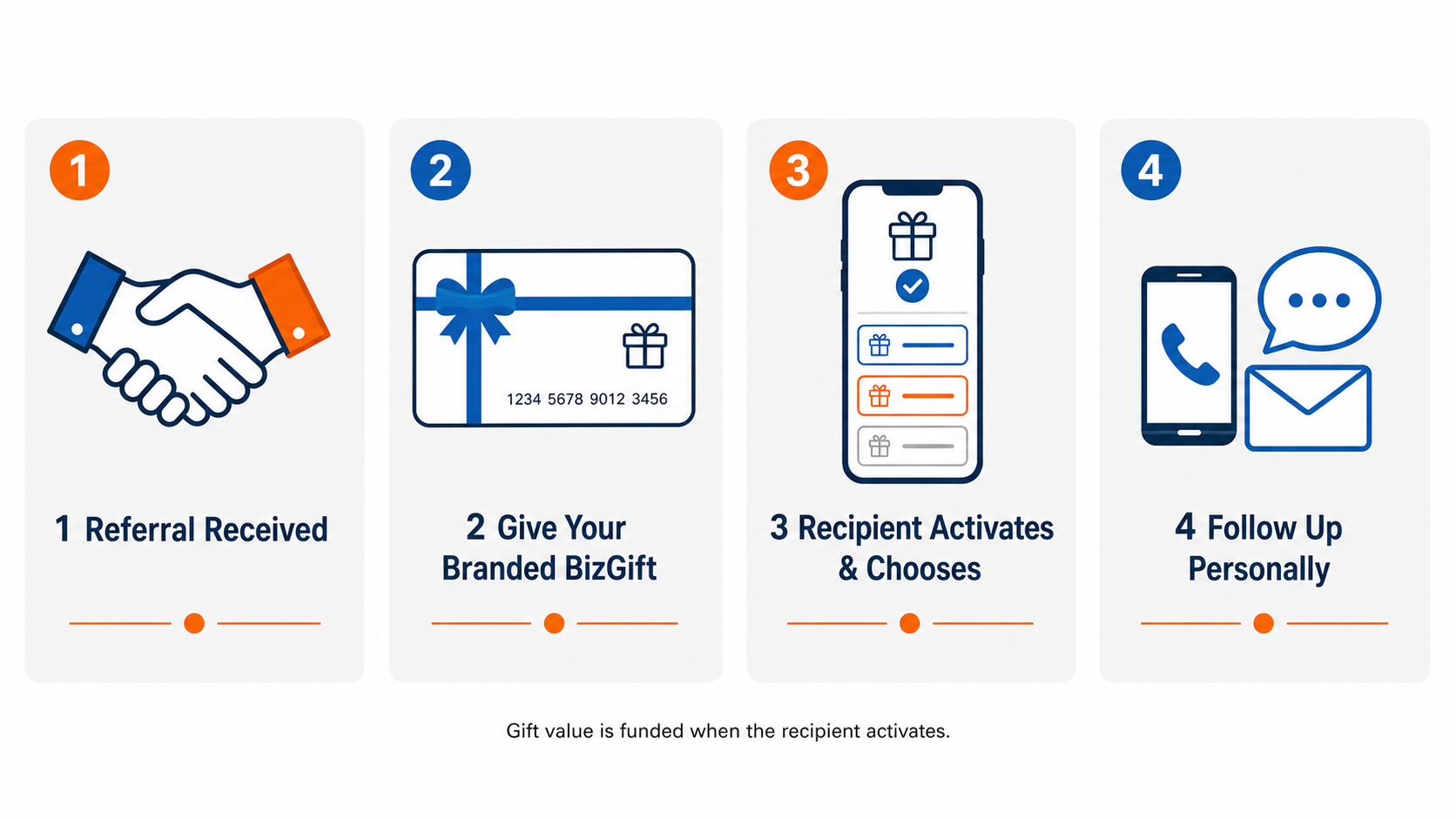
Show the official activation destination and the instructions supplied with the card. Test the message on a phone as well as a computer. A short message with a clear next step is easier to follow than several competing links.
4. Does the delivery fit the relationship?
A branded physical card can accompany a personal conversation. A digital card can suit a remote follow-up. Choose the format that makes sense for the contact rather than adding unnecessary steps.
5. Can recipients choose something they want?
Merchant choice helps make the gift useful to different people. Let recipients explore available options instead of assuming your team’s favorite brand will suit everyone. Availability and merchant terms can vary.
6. Can they find help without guessing?
Include an easy way to reach support. Make sure the team handling questions understands the campaign. If someone is uncertain about a message, encourage them to verify it through the official BizGift site rather than sharing sensitive information with an unfamiliar sender.
7. Have you tested the complete journey?
Ask a colleague outside the campaign team to review a sample. Have them explain what they think the gift is, where they would activate it, and how they would get help. Fix the confusing parts before expanding the campaign.
8. Is the follow-up respectful and measurable?
Track activations, support questions, and the next relationship outcome. Activation is an engagement signal, not proof that someone wants to buy. Use it to support a timely, relevant conversation—not repeated pressure.
A clear recipient experience is part of the campaign, not an afterthought. Start with a small test, learn where people need help, and make the next send easier.
Learn about BizGift at https://bizgift.com/

 Team BizGift

